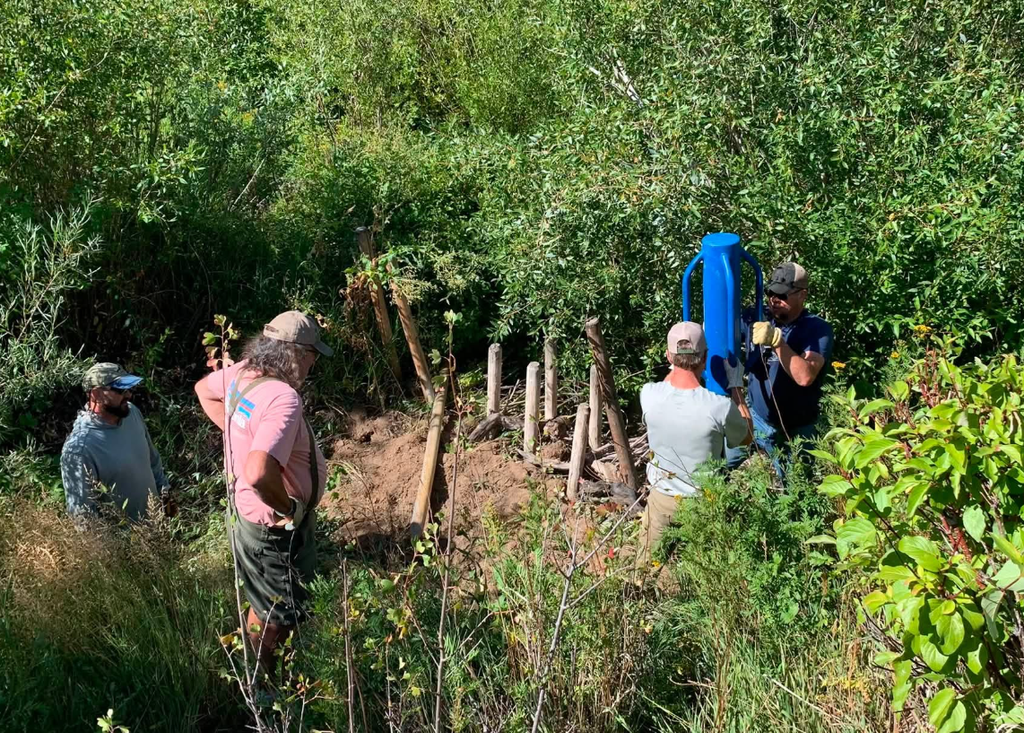
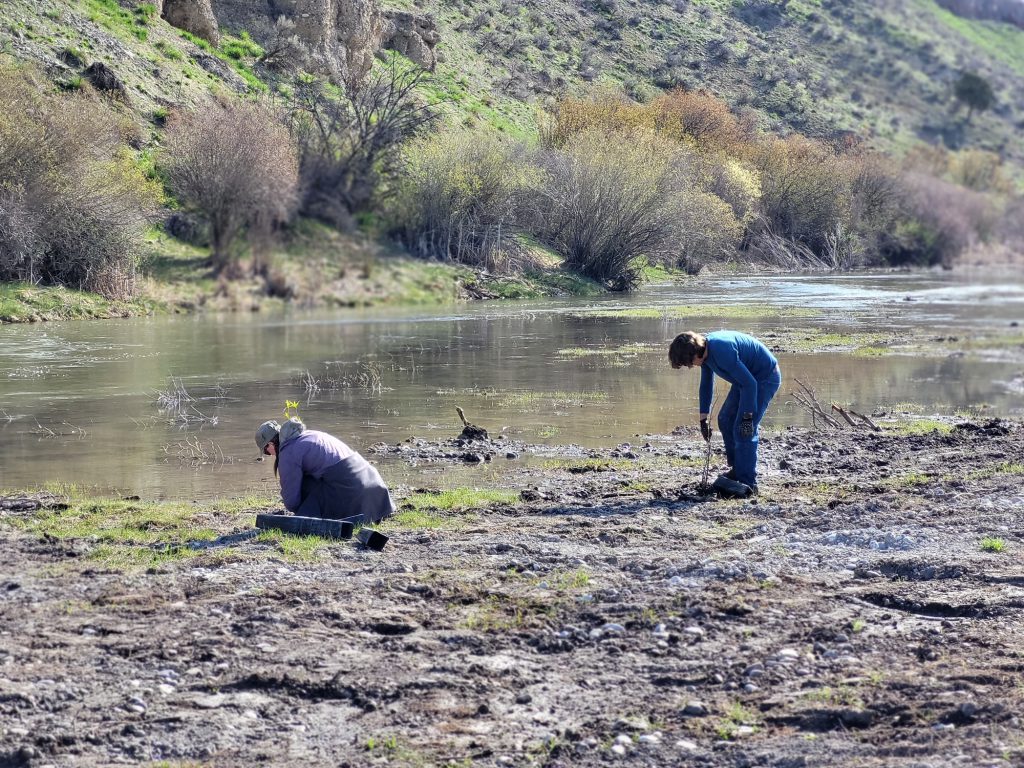
- Tex Creek Riparian Restoration
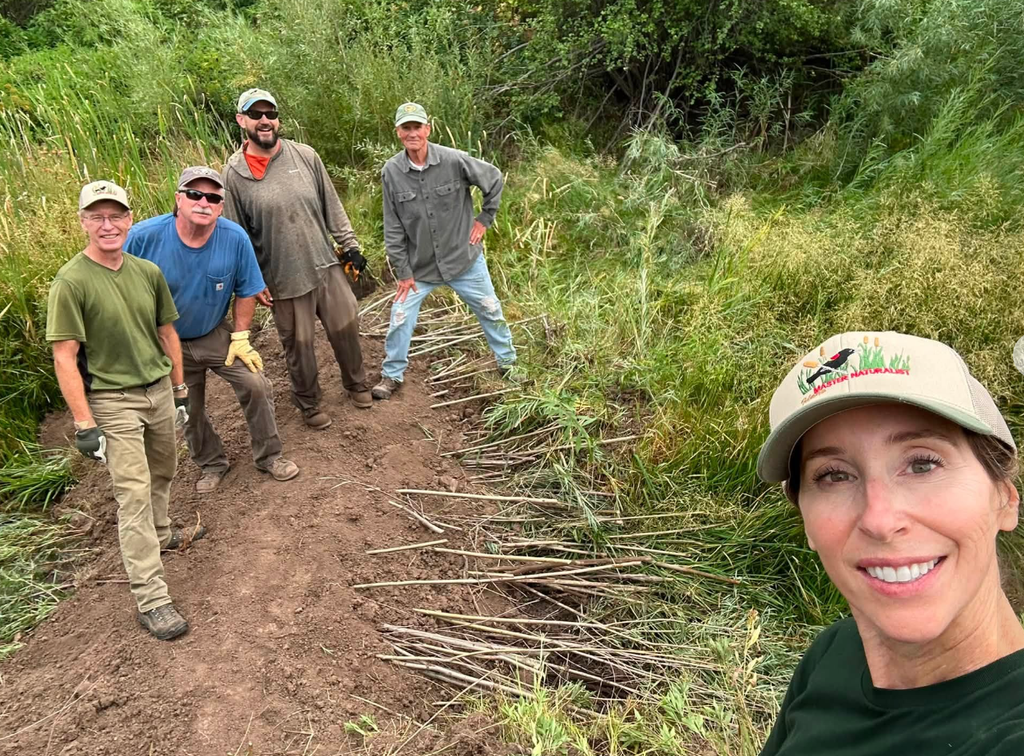
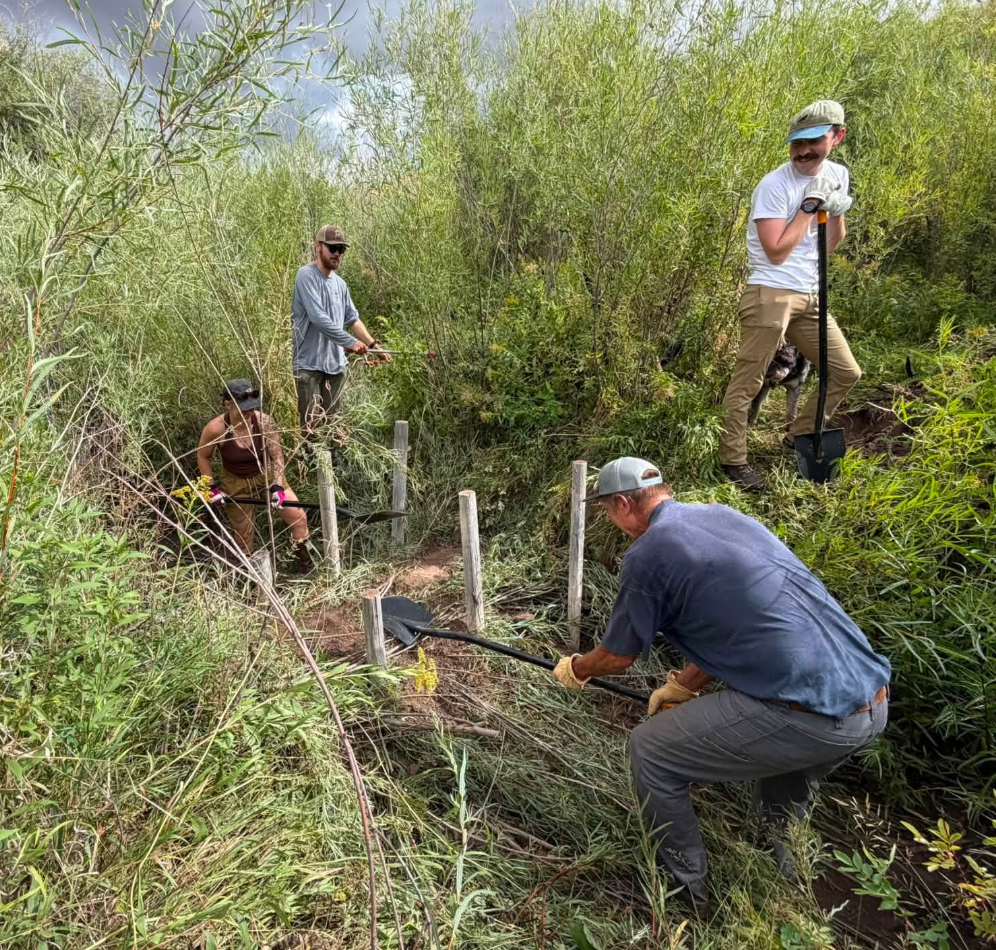
BDA, LTPBR, or Tex Creek Riparian Restoration.
A big thank you to all of the volunteers on this project… A job well done!
- Walleye Population in Ririe Reservoir on the Rise
From Upper Snake River Region Fisheries Newsletter
By John Heckel – Regional Fisheries Biologist
Walleye were illegally introduced to Ririe Reservoir and were first discovered in 2008. In 2009, monitoring of the Walleye population began to determine its status and changes to the existing fishery. Fall Walleye Index Netting (FWIN) began in 2010 and occurs during the end of October when the water temperature drops to 50-60 degrees Fahrenheit.
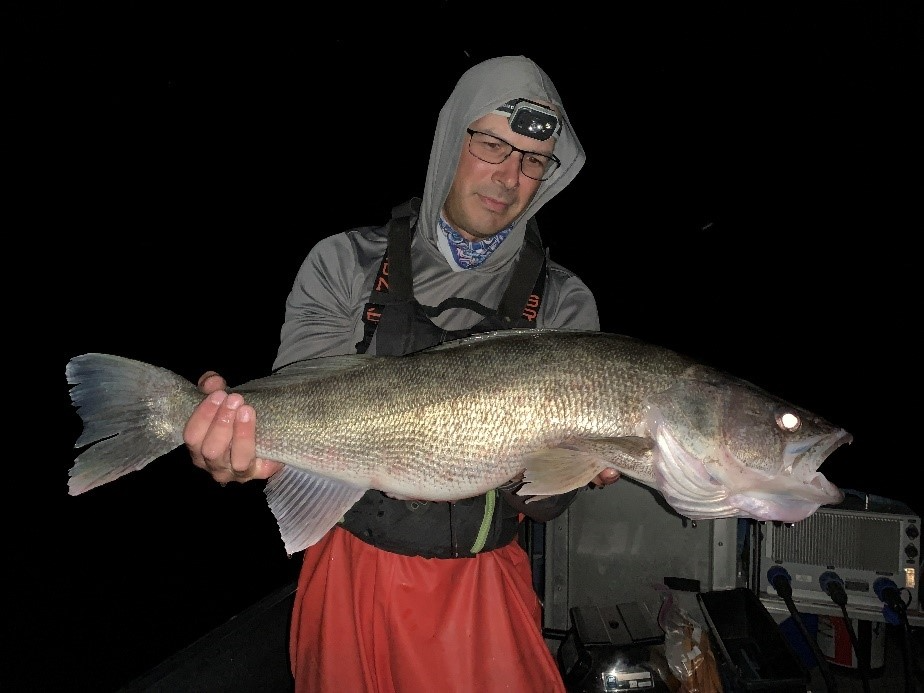
The total catch for Walleye this year was 86 fish, which far exceeded the average of 10 fish per FWIN that we have seen during other surveys. The boom in Walleye abundance is largely attributed to a strong year class of age-2 fish that are about 11-13 inches long. We also caught Walleye up to 29 inches and sampled a 32-inch Walleye during a different survey in July (pictured above)!

Ririe Reservoir is different than waterbodies where Walleye are native. Ririe Reservoir does not have a diverse prey base of minnow and nongame species like lakes in the upper Midwest and Canada, so they will eat the forage available to them, which in Ririe is other sportfish species. This is problematic for managing our other popular sportfish like kokanee, Smallmouth Bass, and Yellow Perch. We encourage anglers to harvest all Walleye caught in Ririe and we will be conducting future studies to evaluate where Walleye are spawning and what their seasonal movements are like in the reservoir.

In addition to catching Walleye, fall gill netting also produces good catch rates of Yellow Perch. This year, we caught a lot of Perch in the 9-inch range, but also some smaller Perch that is good to see because it means there is a younger year class of fish that will continue providing anglers with opportunities in the future as they grow into a larger size.
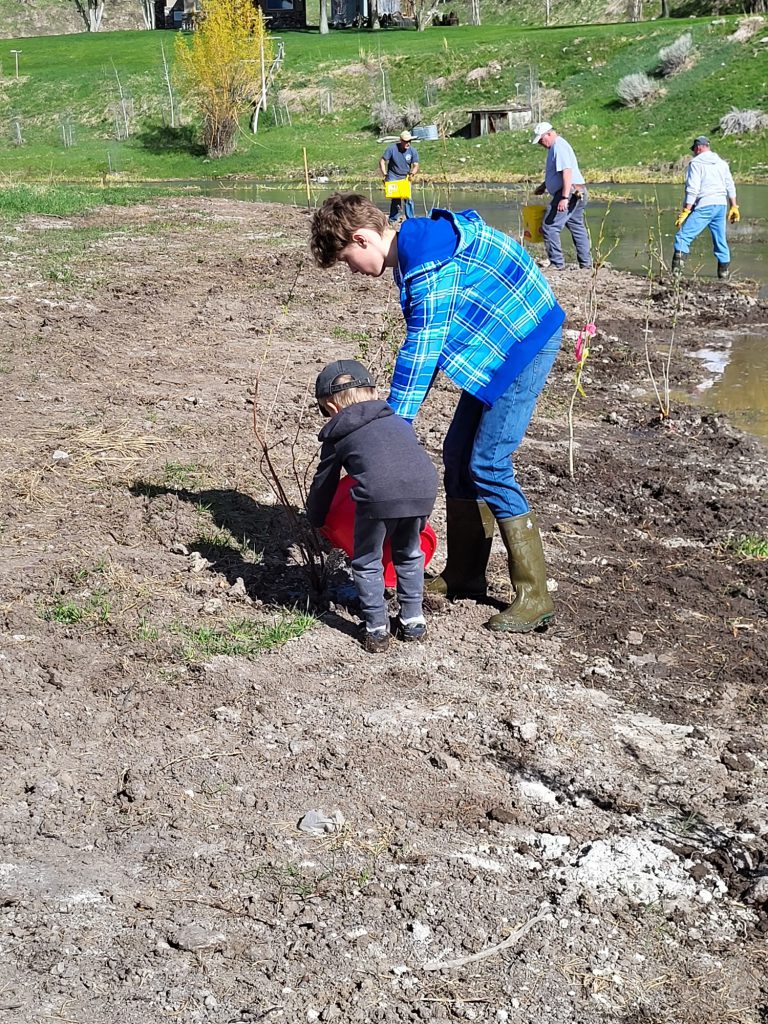
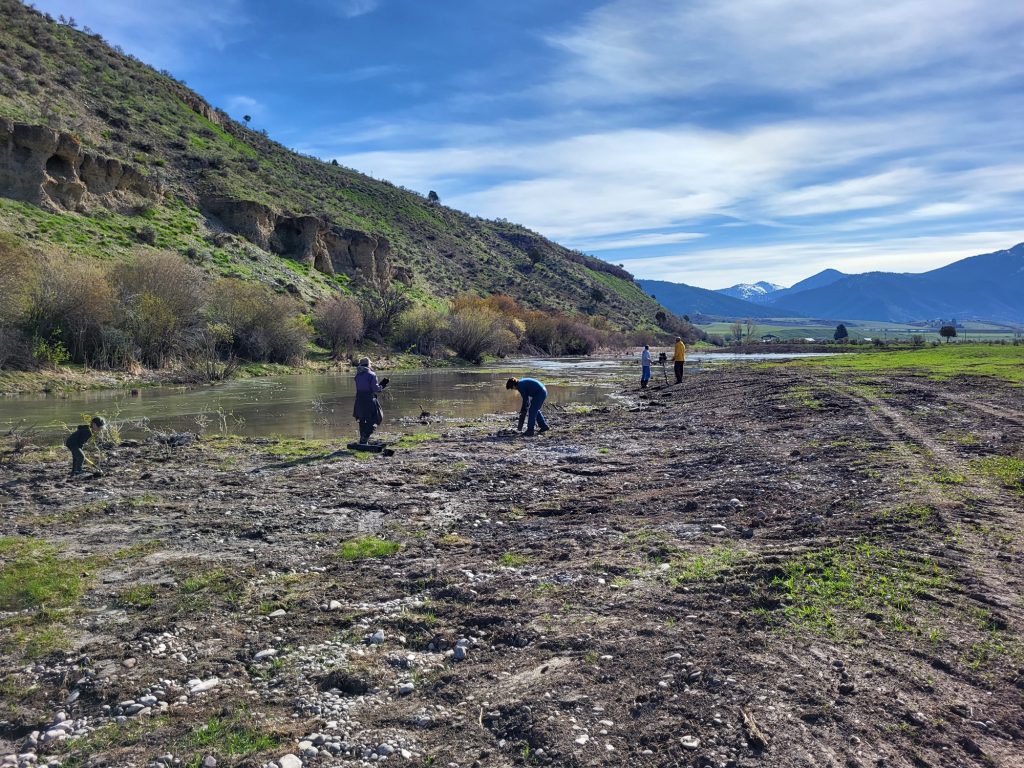
- Photos from Tree Plantings in 2023
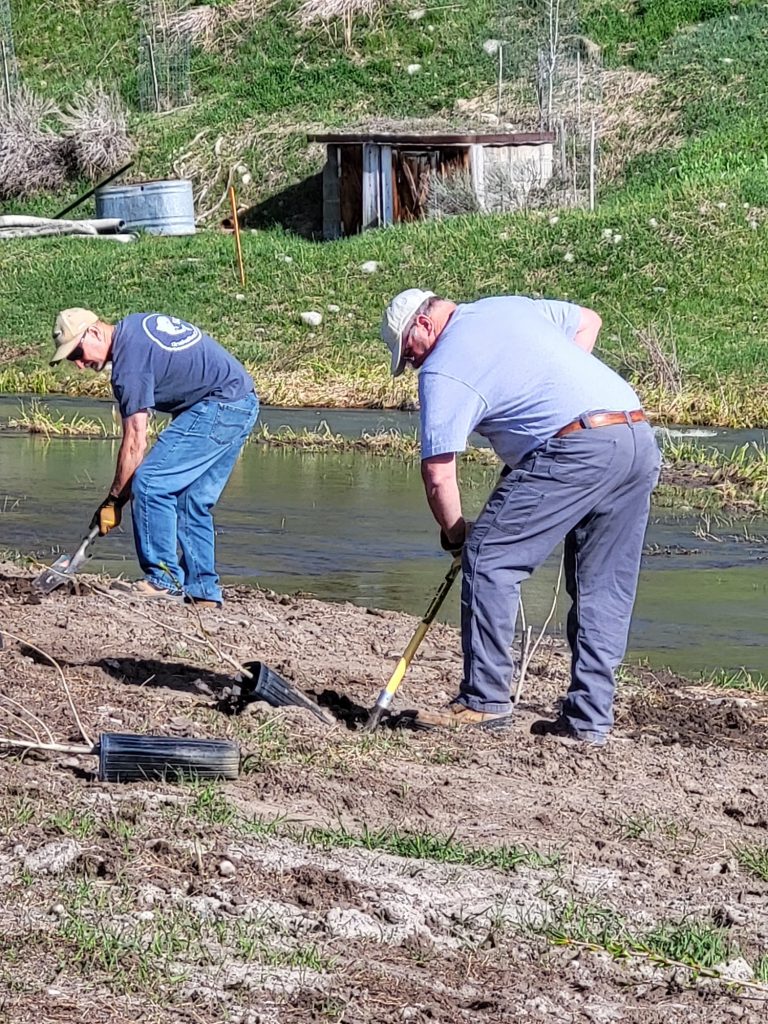
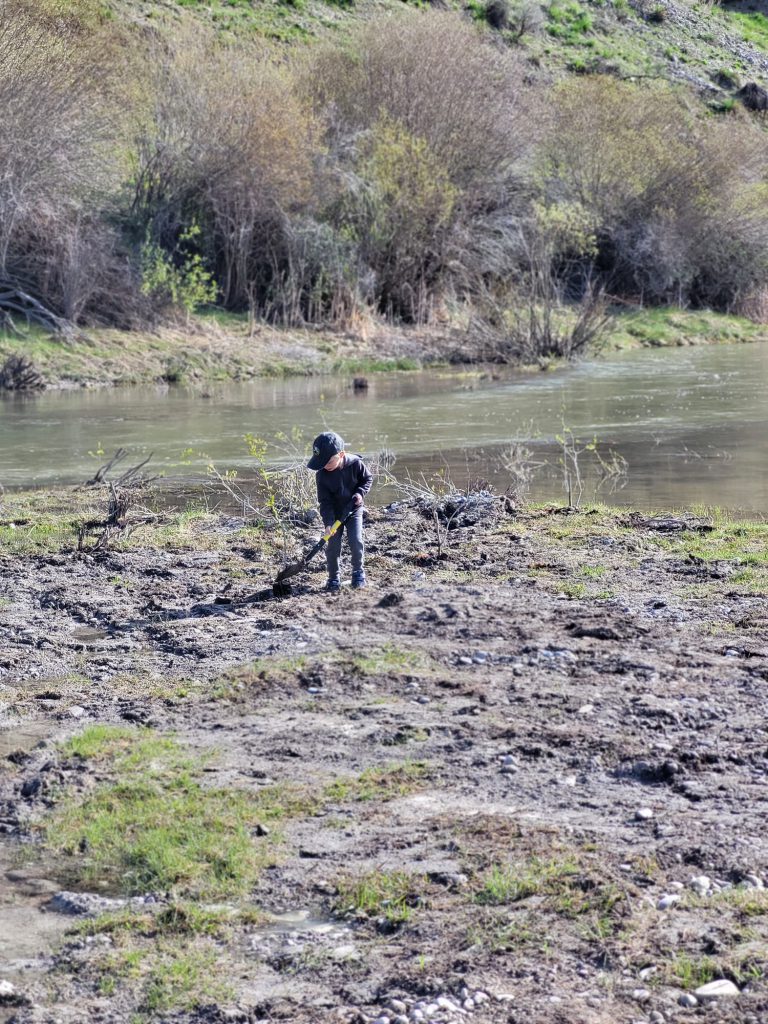
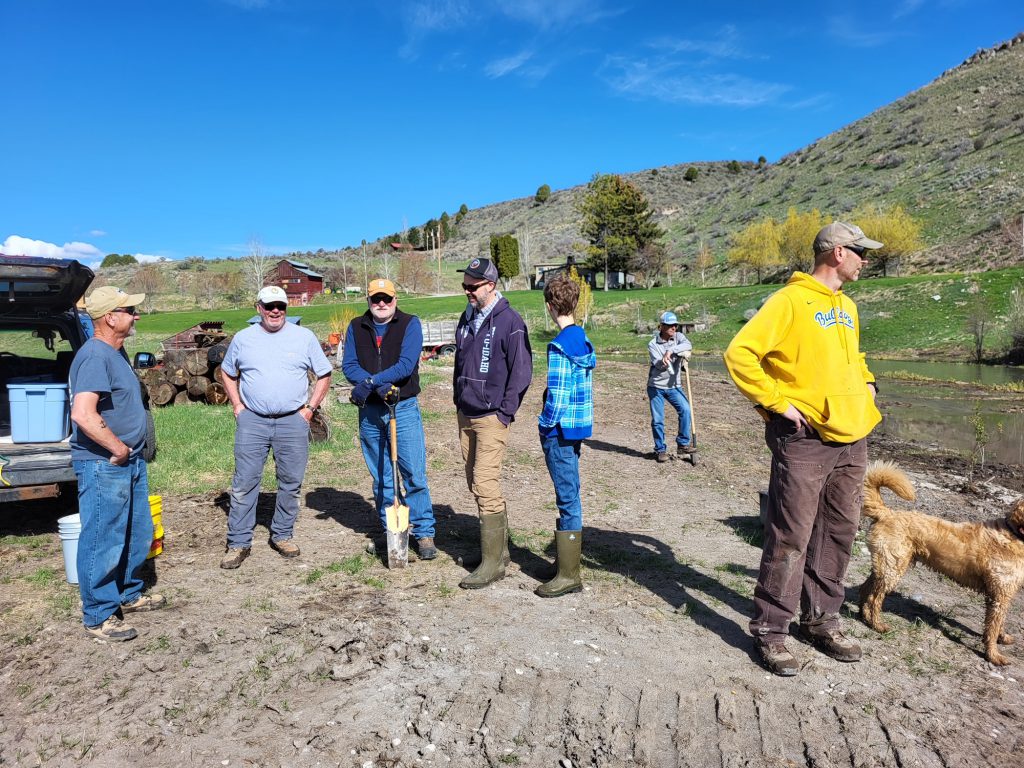
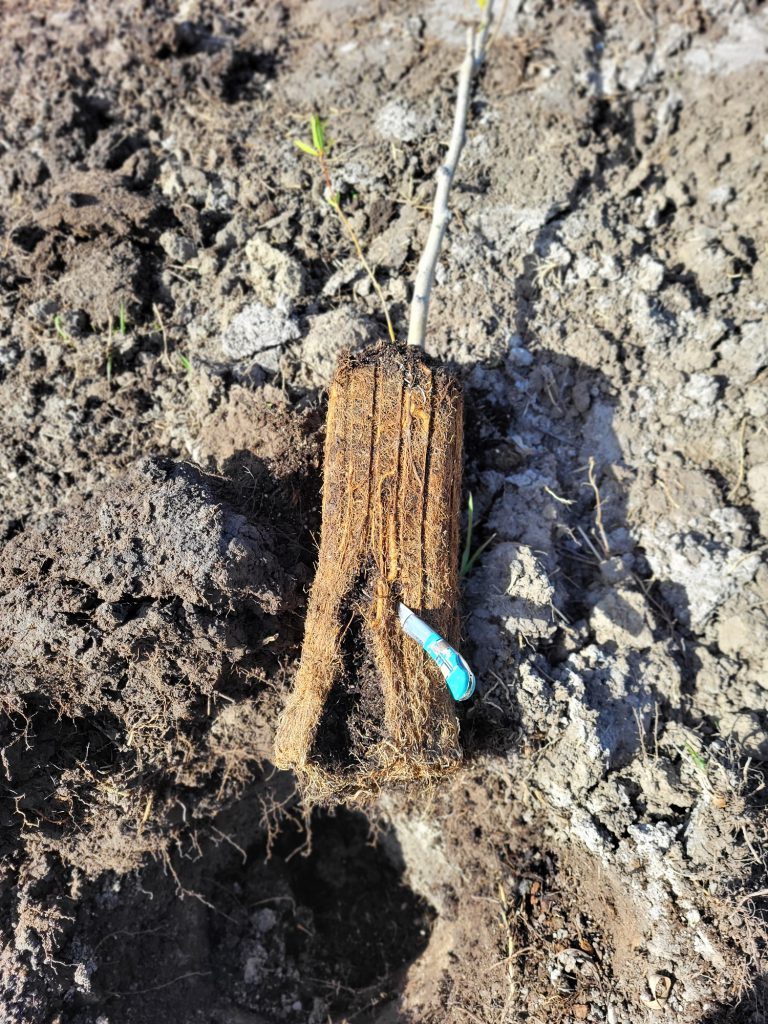
- Photos from recent maintenance on Diamond Creek activity
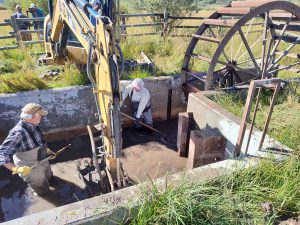
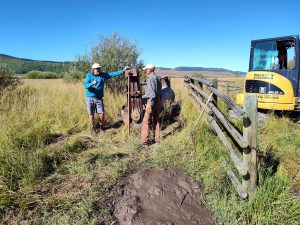
- Upcoming conservation opportunitiesPlease consider helping out with the following opportunities to assist with conservation efforts in Swan Valley this fall. 1. Matt Woodard needs assistance on September 15 (note that this is a Friday, sorry for the short notice) cleaning the screens on Diamond Creek, this involves some heavy shoveling and debris removal. A crew of four to five additional volunteers would be great. I need to know who might want to help so that Matt can finalize plans with the contractor who is assisting with this effort. We will carpool and make plans once we have a crew. 2. On September 23, we will be doing our semi-annual roadside clean up. We will be meeting at the Spring Creek overflow parking lot (just before the bridge over the Snake) at 10:00. If you can assist, please contact me so that I can plan accordingly. 3. Our next effort will be working cooperatively with David Westcamp of the South Fork Initiative to plant trees along Rainey creek. This is scheduled for October 21 at 9:00 and we will meet in the lot on the right side of the road just before the Sundaes Eats and Treats ice cream store (just before the junction of Route 26 and Route 31). Again, please contact me so that we can plan accordingly. 4. The last effort I want to present is really an opportunity to witness the placement of a new diversion screen on Rainey Creek. This has been a joint effort and represents the kind of project that cooperation between SRC and others can accomplish. Kudos to Matt for leading this effort and seeing this through from inception to implementation. The installation is just up the road from Hansen Guest Ranch on Rainey Creek Road. I will be posting more details for this event in the future. This will occur on Friday October 13. Please contact Andy Bosworth at [email protected] or 207-713-3457 to help with any of these opportunities.
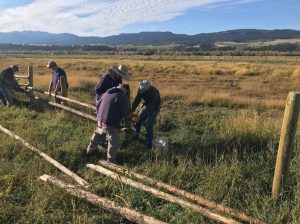
- Conservation UpdateConservation Update: November 2022 Arn Berglund Pres, Andrew Bosworth Conservation VP October 8 Fence Building Eight hearty volunteers showed up bright and early to finish the remaining section of fencing on Third Creek and its headwater springs in Swan Valley. Fencing on this section started in the Spring of 2022 with extensive work done by Snake River Cutthroats continuing through this fall. Third Creek feeds into Rainey Creek and has been the site of extensive protection and remediation. The Henry’s Fork Snake River Initiative has done work to reestablish the creek’s historic channel downstream close to Rainey Creek. Early observations reveal that this work will benefit Cutthroat populations in the South Fork. The fencing effort on Steve Griffel’s property will reduce sediment load to the creek and further enhance the ability of spring creek to be a productive nursery to the South Fork. Thanks to Arn Berglund, Paul Paterson, Matt Woodard, Steve Moss, Dan Smith, Lee Morse and a prospective new member Jeff Gee on this final outing. This final fence building outing by the SRC fence builders ended 5 outings of building 3 rail pole fence on Third Creek and Rainey Creek. Crews built over 6,000 ft of fence.
 October 29 Hwy 26 Adopt a Highway Cleanup Semi-annual roadside cleanup went off without a hitch. Thank you to the following volunteers who were there: Arn Berglund, Lee Morse, Hal Gordon, Susan and Pat Marushia and Brian King. Please be watching for the spring cleanup.
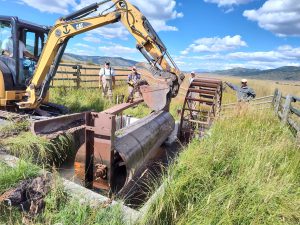
Rainey Creek Screens Another year of screen and belt maintenance has been completed. Most of the ditch diversions on Rainey creek have had either belts or drum screens installed to prevent fish from entering the irrigation ditches. Matt Woodard working with Trout Unlimited was instrumental through the years establishing these protections. The Club has taken on the maintenance as our contribution to assist landowners who are cooperating in this endeavor. SRC received an Embrace a Stream grant to replace a bubbler screen with another drum screen on another irrigation ditch coming off Rainey Creek. Special Thanks to Matt Woodard and Arn Berglund taking care of the seasonal installation and removal of the Belt Screens, and to Andy Bosworth for coordinating volunteers. Volunteers this season included Myles Pawlaczyk, Rob Knox, Rick Carosone and Leslie Soderquist. Watch for news in the spring if you are interested in helping with this endeavor. Generally, the screens and belts are cleaned of leaves and woody debris two to three times a month. The season runs from April to October.
October 29 Hwy 26 Adopt a Highway Cleanup Semi-annual roadside cleanup went off without a hitch. Thank you to the following volunteers who were there: Arn Berglund, Lee Morse, Hal Gordon, Susan and Pat Marushia and Brian King. Please be watching for the spring cleanup.
Rainey Creek Screens Another year of screen and belt maintenance has been completed. Most of the ditch diversions on Rainey creek have had either belts or drum screens installed to prevent fish from entering the irrigation ditches. Matt Woodard working with Trout Unlimited was instrumental through the years establishing these protections. The Club has taken on the maintenance as our contribution to assist landowners who are cooperating in this endeavor. SRC received an Embrace a Stream grant to replace a bubbler screen with another drum screen on another irrigation ditch coming off Rainey Creek. Special Thanks to Matt Woodard and Arn Berglund taking care of the seasonal installation and removal of the Belt Screens, and to Andy Bosworth for coordinating volunteers. Volunteers this season included Myles Pawlaczyk, Rob Knox, Rick Carosone and Leslie Soderquist. Watch for news in the spring if you are interested in helping with this endeavor. Generally, the screens and belts are cleaned of leaves and woody debris two to three times a month. The season runs from April to October. - Forest Service Fence Project
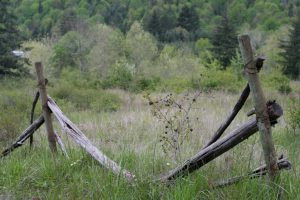 Upcoming service opportunity –Forest Service has asked for some help with the completion of the fence our club helped with last spring along Rainey Creek. The date has been set for Tuesday, April 26th.If you are interested, please email the club at [email protected].
 - Swan Valley Bridge Highway 26 CleanupIf you are not aware, The Snake River Cutthroats have adopted a section of Highway 26 on both sides of the Swan Valley Bridge. Saturday, October 27, a Crew of Cutthroats descended on that section of highway for the annual cleanup. Thanks to Tim Crain and family, Lee Morse, Rory Cullen and Scott Long for volunteering a few hours of their Saturday to get the job done.
- 2018 Conservation Project (Leadore, Idaho)The 2018 Conservation Project is schedule for May 19th at Canyon Creek near Leadore. Check out the Events calendar for all the details and check out the photo for the kind of work we’ll be doing. Contact Paul Patterson if your are planning on helping out.
- Rainey Creek Fence Removal Project[gview file=”https://snakerivercutthroats.org/wp-content/uploads/2018/05/2018-Rainy-Creek-Fence-Project-Write-up-for-Website.pdf”]
- Tincup Creek Conservation Project( The below description of completed objectives is taken from TU Snake River Headwaters Project Manager Leslie Steen’s extensive report forwarded to the Snake River Cutthroats Board of Directors on December 11, 2017. The entire report can be obtained through contacting the TU Snake River Headwaters Project Office). Project Outcomes: Project implementation for Phase 1 of the Tincup Creek Stream Restoration Project occurred between July 15 and September 30, 2017, with Rockin’ T Construction, Swan Valley, ID performing the excavation contract work and CTNF staff providing construction staking and project oversight. Objectives 1 and 2 were accomplished through a variety of treatments including elevating riffles, narrowing the channel, decreasing stream slopes, reconnecting cut off meander bends, reconnecting the floodplain, and resloping and revegetating eroding banks.
- In total, 1.9 miles of stream were restored: o 1.4 miles of channel were elevated and treated (through narrowing and floodplain reconnection). o 4 historic meanders were reconnected, adding an additional 0.5 miles of channel length.
- 5 acres of wetland were restored or enhanced through these activities. Objective 3 was accomplished through the above restoration techniques.
- Pool habitat and pool depth were increased.
- Large wood added into the system provides structural stability and additional habitat complexity and instream cover, especially for juvenile trout and other native fish species.
- 500 large trees with root wads were harvested and placed on site to be used throughout the three phases of the project, with about 175 of them used in 2017. Objective 4 was accomplished through the following:
- A volunteer day involving three TU chapters (Jackson Hole, Snake River Cutthroats, and Star Valley) was held on October 20, 2017 (approximately 90 volunteer hours). Volunteers helped with the restoration activities, including planting willows and mulching and reseeding restoration areas.
- The project was featured in the nation-wide online TU Orvis Embrace A Stream matching challenge competition in November 2017, which raised visibility for the project and an additional $1,645 in donations for the project.
- Cross fences in cattle allotments were improved.
- A new cattle guard was installed to protect an additional 0.8 miles of leatherside chub habitat as well as provide better late season management of cattle, giving the project more effective rest from grazing use.
- A monitoring plan was developed by CTNF and IDFG staff, with pre-project habitat and fish monitoring completed within the Phase 1 reach as well as in representative sampling units outside of the project area.
- A press release was distributed to regional newspapers and posted online at TU.org.
- The project was featured in an Idaho Soil & Water Conservation Commission October newsletter and in partner newsletters, emails, and social media sites.
- A temporary information sign was placed at each end of the project, describing actions and recognizing partners. A robust permanent sign will be placed on project completion
- 2016 Canyon Creek Conservation Projectby Paul Patterson For the 28th consecutive year the Snake River Cutthroats conducted our springtime conservation project in the Salmon/Lemhi River drainage. This year’s project was on Canyon Creek, a Lemhi River tributary east of Leadore. This is the third project that the Cutthroats have done on Canyon Creek. This project is part of a Forest Service five year plan to restore four miles of Canyon Creek. Canyon Creek was reconnected to the Lemhi a few years ago, which will ultimately restore previously lost spawning habitat for anadromous fish. The weather was a bit more challenging this year. So it was really nice to have Buck’s “tent” for cooking. Forest Service biologist Craig Hemping who directed the project had plans to place root wads or to plant willows at 30 sites. Willows will provide shade and stabilize eroding stream banks, while the root wads help reduce erosion, stabilize stream banks and provide fish habitat. We finished all the sites by mid-afternoon and returned to the Smokey Cub campground to prepare and enjoy the traditional steak bbq. The Eastside Soil Conservation District generously allowed us to use their water jet as they have in the past. The Forest Service has acquired ther own water jet, which helped speed the project along faster than expected. Thanks to Pat Marushia, Richard Cain, Wade Allen and Duane O’Reilly for helping with the cooking and the cleanup. Thanks to everyone who brought food to share and stories about fish caught or the one that got away that just get bigger every year. Another great project! Snake River Cutthroat participants on this year’s project included: Wade Allen, Mike Avery, Arn Berglund, Richard Cain, Tim Crain, Rory Cullen, Buck Goodrich, Ron Hover, George Klomp, Scott Long, Pat and Susan Marushia, Mike Miller, Ron Mizia, Danny Morse, Stephen Moss, Duane O’Reilly, Paul Patterson, John and Ryan Svoboda, and Matt Woodard. From Salmon River of No Return chapter we had Nancy Garcia, Jerry Myers, Gary Power and Frank Green. And from the Forest Service we had fisheries biologists Dan Garcia and Craig Hemping, and fish technicians Heyfa Khenissi , and Josh Stafford.
- 2015 Upper Blackfoot Willow Planting Projectby Paul Patterson Late May and early June were a busy time for SRC conservation projects. There was the traditional spring project with the Salmon-Challis National Forest held this year the last weekend of May (see separate write-up) as well as a willow planting by the SRC Youth Club on the first weekend of June. Scheduling back-to-back weekends was more by default than by design. As many of you are aware, Matt Woodard’s efforts for Trout Unlimited have shifted from the South Fork to the Blackfoot River. Part of the effort on the Blackfoot involved rebuilding 2,300 feet of Sheep Creek on the upper Blackfoot last year. Like many streams in the west, Sheep Creek had been straightened decades ago and basically turned into a ditch for irrigation. The meandering stream has been rebuilt, but was in need of some additional vegetation to help stabilize banks and ultimately to provide shade. Cattle will be excluded from the area for five years to allow vegetation to re-establish. The Cutthroats purchased 72 potted willow plants from North Fork Native Plants in Rexburg to plant along Sheep Creek – more Expo dollars at work for conservation. Trout Unlimited had Rockin T Construction, the company that rebuilt the stream, use a track hoe with an auger to dig the holes to speed up the planting process. Matt borrowed a grain truck from the family farm to haul the willows. The high sides protected the willows on their 2-hour ride to the planting site. While most of the activities for the youth group focus more on fishing and fun, the youth felt it was important to put some effort into conservation as well. But work can also be fun. I think the pictures speak for themselves. Distributing the willows along the creek was the first order of business. Then it was time to break out the shovels to fill the hole to the appropriate level, insert the willow and fill the hole. Water was added to make sure the soil settled so there wouldn’t be air pockets that would hurt the survival of the willows. Many willing hands allowed us to finish the project quickly. There were nine youth and nine adults involved with the project. Thanks to the parents who provided transportation and to the parents who couldn’t be there but allowed their children to participate in the project. The youth group included: Anabel (13) and Asher Assante (8), Ian St. Michel (12), Josh (17) and Shea Crain (14), Olivia (12) and Tara Wootan (6), Shai Cunningham (15), and Payton Stanger (15). Adults included: Christina and Mike Assante, Curtis St. Michel, Tim and Christi Crain, Shane Wootan, Matt Woodard, Jeff Armstrong and Paul Patterson. Unfortunately, the rain that held off all morning allowing us to plant the willows pre-empted out hoped for group photo.
- 2012 Hayden Creek Conservation ProjectThe Snake River Cutthroats completed one major conservation project in 2012. The May 19th project was on the Tonsmeire Ranch in Lemhi County, which has been protected by a conservation easement through the Nature Conservancy. This project also marked the 24th consecutive year for the Cutthroats working on conservation projects in Salmon River drainage. The weather treated us very well – no rain and more importantly, no snow as we have had to contend with on some of our spring projects in the Leadore area. The Cutthroats, a few volunteers from the Upper Snake River Fly Fishers, and a crew from the Shoshone-Bannock Tribes provided the labor to build approximately 2,500 feet of jack fence to protect a riparian area along Hayden Creek, a major tributary to the Lemhi River. Sammy Matsaw, Sho-Ban Tribe, and Jerry Myers, Upper Salmon Project Manager for Trout Unlimited, coordinated the project. Because of the long drive from Idaho Falls, most volunteers showed up on Friday night and stayed until Sunday morning so that they can enjoy the traditional steak fry at the end of the project. The Tonsmeire family rented the Hayden Creek Grange Hall, which gave us a place to cook and serve meals, as well as room to camp and park trailers. As you can see from the group picture below, they also provided some much appreciated, cold, malted beverages for us to enjoy at the end of the project. Thanks to all those who donated their time and equipment, and who worked so hard to make this another very successful and enjoyable project. Special thanks to Cloyd for use of his large grill and for cooking and cleaning. Other chefs, sous chefs and cleaners included Buck, Mike, Duane, Arn, Susan and Pat. Thanks to Dan Garcia and the Salmon-Challis National Forest for the Rise to the Future baseball caps for all volunteers. And a very special acknowledgment to Kermit for the roasted rock chuck, truly one of the highlights of this year’s project. Check with Allan Wooley to find out whether it really tasted like chicken. Volunteers included: Wade Allen, Jeff Armstrong, Arn Berglund, Cloyd Bland, Andy Bosworth, Rory Cullen, Gale Danielson, Ava Danielson, Dan and Nancy Garcia, Buck Goodrich, Chad Hill, Ron Hover, Scott Long, Pat and Susan Marushia, Mike Miller, Duane O’Reilly, Dave and Brenda Pace, Paul Patterson, Kim Ragotzkie, Marv Stuki, Tom and Lori Salas, John Svobda, Mike Taylor, Allan Woolley, and Matt Woodard. The Sho-Ban crew included: Kermit Bacon, Sammy Matsaw, Brodie Sanchez, Sheldon Small, Theresa Tsosie, and Ray Wadsworth. I apologize if I missed any one or misspelled any names.
- 2,500 feet of jack fence built
- 245 hours of volunteer labor building fence
- 104 hours of travel time
- 4,800 vehicle miles donated
- Use of two 4-wheelers donated (Marv and Tom)
- Use of three portable generators donated (Chad, Gale and Allen)
- Use of electric drills, power cords, hammers, chain saws, and various other tools donated
- Hayden Creek Grange Hall rental donated by the Dan Tonsmiere Family
- 2011 Amonson Ranch Little Springs Conservation ProjectThe Snake River Cutthroats completed a fencing project on the Amonson Ranch at Leadore, which completed a project begun in 2006 by then Cutthroat President, Karl Amonson. The April 30th project also marked the 23rd consecutive year for the Cutthroats working on projects in Salmon River drainage. Volunteers built 3,000 feet of jack fence to protect 1,500 feet of restored stream bed on Little Springs Creek. This is prime spawning habitat for salmon coming up the Lemhi River and several spawning redds were found earlier this spring. As you can see in the photographs below that while the calendar indicated spring, the weather did not. Somewhere around 38 volunteers, mostly from the Cutthroats, participated and are listed below. Hopefully, I didn’t miss anyone. I would like to thank everyone who volunteered their time, mileage, tools, generators, 4-wheelers, etc. that made this project successful. In particular it was great to have the Sho-Ban Tribe crew helping, along with Ron Troy from the Nature Conservancy and some of his friends. I would like to thank Jerry Meyers, Trout Unlimited, and the Idaho Fish and Game Department for putting this project together. There are a lot of players in a project like this. I would be remiss if I didn’t thank Dan Garcia, fisheries biologist with the Salmon-Challis National Forest, for allowing us to use the Forest Service facilities at Leadore again this year. The Forest Service also helps cover some of our food costs and again provided volunteers with a project commemorative baseball cap. The Snake River Cutthroats is a very active chapter in terms of raising money for conservation (the Expo) and in helping with on-the-ground projects. We can always use more help, however. Rather than waiting to be asked to help, just volunteer.
- 2017 Canyon Creek Conservation ProjectFor the 29th consecutive year the Snake River Cutthroats conducted a springtime conservation project in the Salmon/Lemhi River drainage. This year’s project was on Canyon Creek, a Lemhi River tributary east of Leadore. This is the fourth project that the Cutthroats have done on Canyon Creek and the 11th year that we have worked on the Leadore Ranger District. This project is part of a Forest Service five-year plan to restore four miles of Canyon Creek. Canyon Creek was reconnected to the Lemhi a few years ago, which will ultimately restore previously lost spawning habitat for anadromous fish as well as provide improved habitat for resident trout. Spring time weather at 6,000+ feet can be a challenge, but this year’s weather was pretty nice. Forest Service fish technician Nate Quisser had designed 20 in-stream structures for the project. We also planted a few Willows at some disturbed sites to stabilize the bank and ultimately provide shade and cover. We finished all the sites by mid-afternoon and returned to the Smokey Cub campground to prepare and enjoy the traditional steak bbq and “Ma’s” dutch oven spuds. Thanks to Arn Berglund, Richard Cain, Curtis St. Michael, Candy and Doug Elliott and Duane O’Reilly for helping with the cooking and the cleanup. Thanks to everyone who gave up a weekend to give back to the fisheries resource. And special recognition to the Johnson Family, represted by three generations. This year’s group of volunteers was the third largest we’ve had and included quite a few folks helping on their first conservation project. Snake River Cutthroat participants on this year’s project included: Wade Allen, Jeff Armstrong, Arn Berglund, Andy Bosworth, Richard Cain, Tim Crain, Rory Cullen, Candy and Dave Elliott, Buck Goodrich, Ron Hover, Cal, Casey, Sherry, Carson and Alexis Johnson, Tim Kaiser, Bill Kelly, Rob Knox, Scott Long, Danny Morse, Lee Morse, Stephen Moss, Duane O’Reilly, Paul Patterson, Lori and Tom Salas, Curtis St. Michael, Chuck Sorrentino, Bob Stark, John and Ryan Svoboda, Mary Tompkins, and Allan Woolley. From Salmon River of No Return chapter we had Nancy Garcia and Jerry Myers. From the Forest Service we had fisheries biologist Dan Garcia, District Ranger Jay Winfield, fish technician Nate Quisser, and wildlife technicians Rebekah Brassfield and Adrienne Stanley. And from the Post Register, reporter Tom Holm. I apologize if Imissed someone or misspelled someone’s name. by Paul Patterson
- Conservation Stories from the RegionIn the physical sense Dubois, Wyoming sits in splendid isolation. The Wind River flows through town, several quality streams are nearby as are almost countless still waters, most of which are in the river’s watershed. Good, clean air and breathtaking scenery abound. Congestion is absent. Also present are abundant salmonids and wildlife, both of which have economic value to the somewhat isolated community. Inevitably degradation began on some streams, and to counter this, concerned angler citizens came together to form the Dubois Anglers and Wildlife Group (DAWGS), a non-profit organization formed to preserve and protect the recreational and aesthetic quality of the upper Wind River watershed. Protection includes promoting a scientific understanding of the watershed and the establishment of benchmarks for restoration, preservation, and long term fishery management which will sustain quality fishing and riparian life. DAWGs works closely with other local organizations, TU, and the Wyoming Game and Fish Department meet its purposes. These associations go beyond providing manpower to install such as fish screens, improve diversion structures and rehabilitate riparian zones. Fund raising, gaining landowner confidence and gaining public support for projects such as these are ongoing but require time and effort. Another activity close to the DAWGS heart is introducing youth to fly-fishing. But something was missing, and that would be an appropriate, safe, convenient water body. The downstream end of the Sawmill Public Fishing Access on the Wind River seemed an appropriate location. Work began in 2007 to realize the pond in that location which also offers suitable stations for physically challenged anglers. So efforts began to raise funding, get approval from the town of Dubois for the location and cooperation, for pond design, and to obtain construction contractors. It took ten years to acquire these and other requirements, but results are that Pete’s Pond has been constructed and filled with Wind River water. Plans and efforts are being made to establish an appropriate shoreline and to obtain resident trout. The pond and its fish will be enjoyed by youth and all anglers. So here is a success story based on what can be accomplished through efforts of a dedicated group of sportspersons. It serves as a shining accomplishment example for all of us. You can read more about Pete’s Pond and what DAWGS has accomplished on their www.dawgsonline.org web site.